Why Factory Enzyme Trials Fail Before the First Batch Runs
Factory enzyme trials rarely fail because the enzyme was impossible to evaluate. More often, they fail because the project was not structured tightly enough to produce a defensible production-floor decision.
For process improvement managers, the risk is not only a missed performance gain. A poorly designed trial can consume production time, confuse operators, generate unusable records, and leave procurement with no clear basis for supplier comparison.
Yieldwright Labs supports factories that need enzyme trials designed around plant constraints, measurable KPIs, and practical validation gates. If you are evaluating an industrial enzyme trial supplier for factories, the first question should not be “which enzyme?” It should be “what decision will this trial allow us to make?”
The failure usually starts before dosing
A factory trial is not a product demonstration. It is a controlled business and process evaluation under real operating conditions.
When that distinction is missed, teams often enter the first batch with:
- unclear success criteria
- uncontrolled baseline comparisons
- operator instructions that differ by shift
- incomplete sampling and observation records
- no defined stop, adjust, or scale-up gate
- commercial questions left until after the data is collected
The result is familiar: the trial runs, people work hard, samples are taken, production is interrupted, and the final discussion still depends on opinion.
Mistake 1: Vague success criteria
“Improve yield,” “reduce processing issues,” or “support efficiency” are not trial criteria. They are objectives. A factory trial needs decision-grade metrics.
Before the first batch runs, the team should agree on:
- the primary KPI that determines trial success
- secondary KPIs that must not deteriorate
- acceptable operating ranges during the trial
- minimum evidence required for a recommendation
- what result would justify a second production run
- what result would stop the project
A trial can show a positive effect and still be commercially weak. For example, a measurable improvement may not be worth the handling burden, added complexity, or disruption to the current process. Strong trial design makes those trade-offs visible early.
Mistake 2: Weak baseline control
Many enzyme trials compare a trial batch against a convenient historic batch. That may be quick, but it is often not reliable enough.
Factory processes move. Raw material quality, temperature profiles, equipment loading, operator routines, hold times, and cleaning status can all influence the outcome. If those variables are not controlled or recorded, the enzyme effect becomes difficult to separate from normal plant variation.
A better baseline plan defines:
- which current process runs are valid comparators
- which raw material and operating differences must be documented
- which production conditions require exclusion from the comparison
- whether a same-day or adjacent-run comparison is needed
- how exceptions will be handled in the final review
The purpose is not to create a laboratory-perfect environment. The purpose is to keep the comparison honest enough for a production decision.
Mistake 3: Operator confusion at the point of use
An enzyme recommendation can be technically sound and still fail at execution.
Plant operators need clear, practical instructions that fit the line. If the trial requires extra handling, unfamiliar timing, manual checks, or a temporary dosing step, the procedure must be written for the actual production environment—not for a meeting room.
Common execution gaps include:
- unclear responsibility for preparation and addition
- ambiguous timing relative to normal process steps
- poor labeling of trial and control materials
- no shift handover note
- no escalation route if the batch deviates
- informal verbal instructions that change during the run
Operator alignment is part of trial control. If the floor team is unsure what to do, the data will reflect the confusion.
Mistake 4: Trial records that cannot support a decision
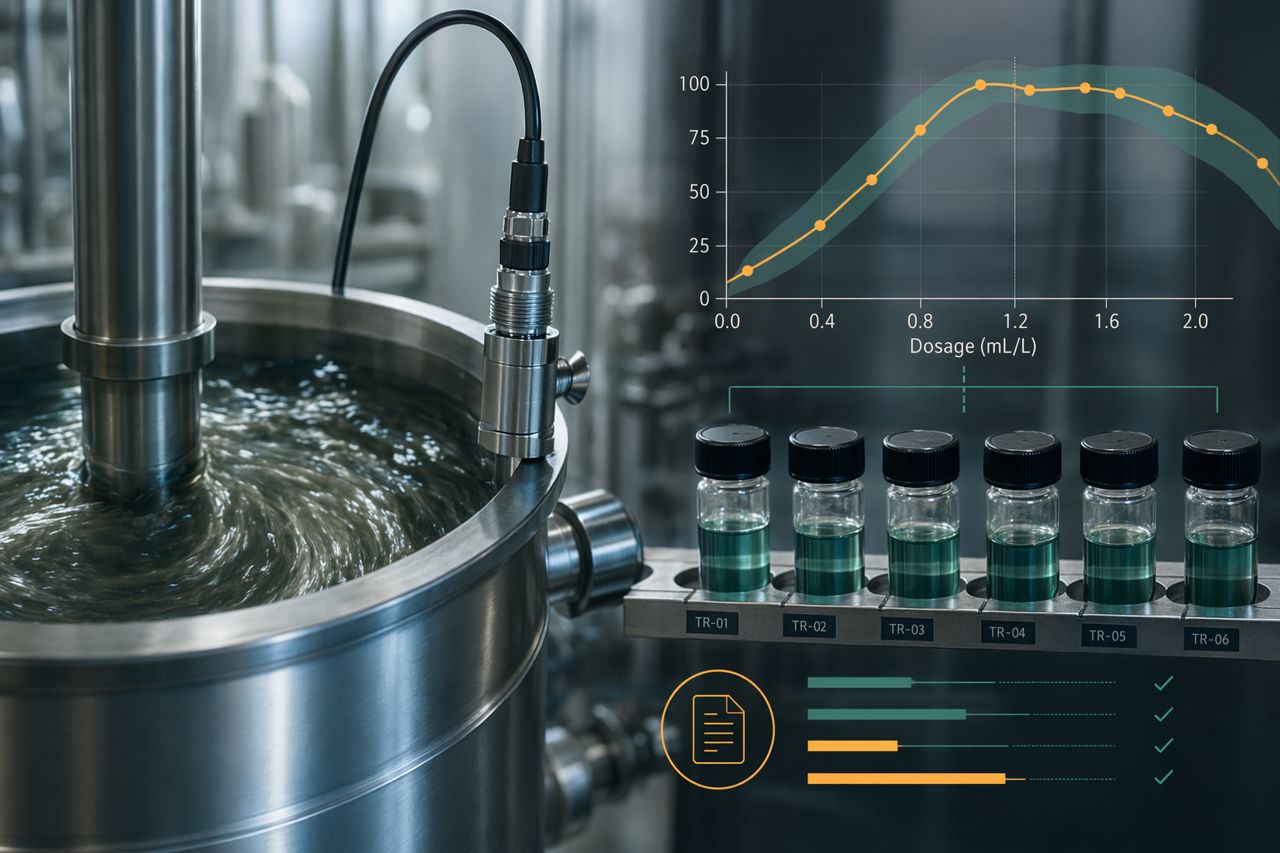
Factory trials often generate too little structured evidence. Teams may have lab notes, batch sheets, email comments, and sample labels—but not a clean trial record.
A useful record should connect four things:
- What was planned
- What actually happened
- Which results were measured
- What decision the results support
That record should include deviations, observations, and commercial context. A small variation in process timing may explain a result. A handling concern may cancel out an otherwise promising gain. A quality hold may make a batch unsuitable for comparison.
If trial documentation is built after the run, it is usually incomplete. The record template should exist before the first batch starts.
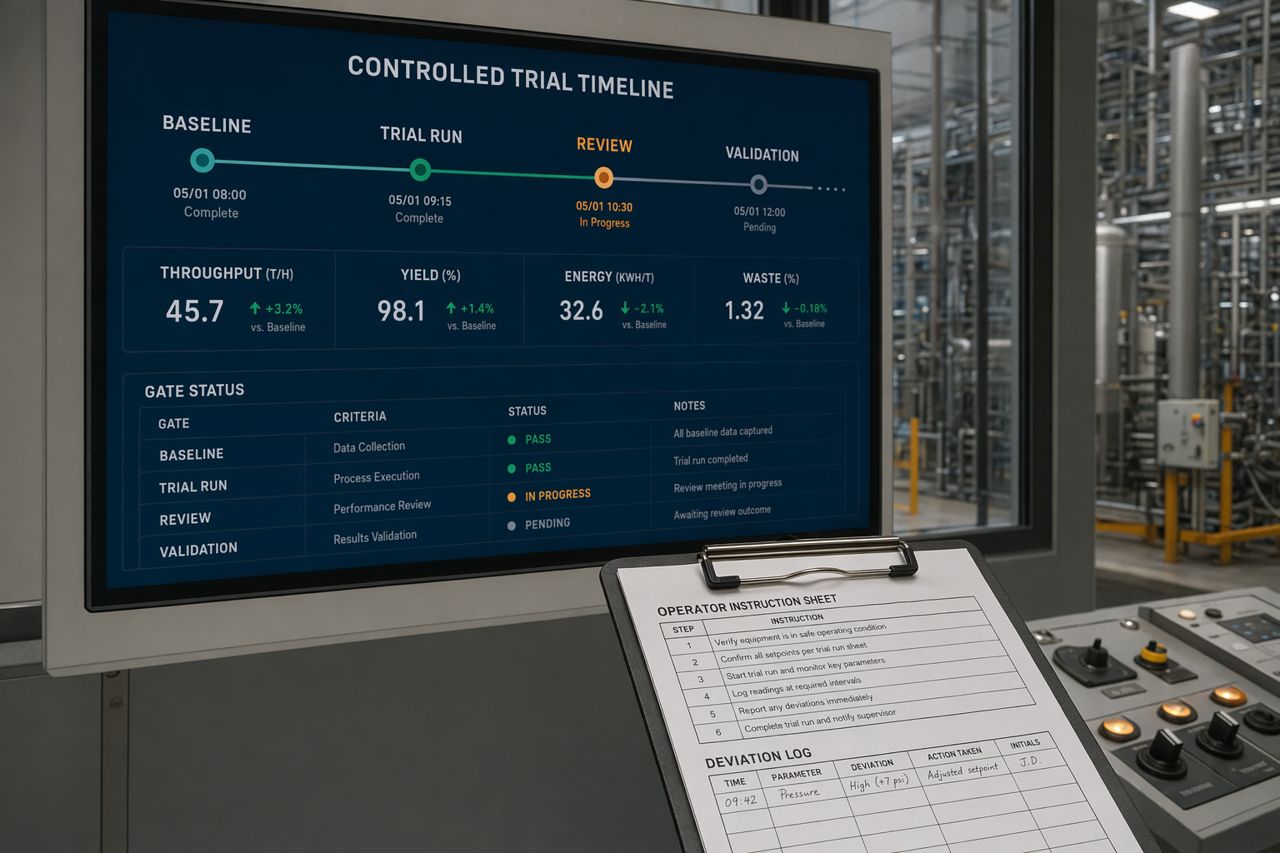
Mistake 5: No defined decision gate
The end of a trial should not be a general discussion. It should be a gate.
A disciplined enzyme trial has a defined route after results are reviewed:
- proceed to a second controlled run
- adjust dosage strategy or addition point
- narrow the application window
- pause pending more baseline data
- reject the candidate for this process
- move toward commercial validation
This avoids the slow drift that affects many factory projects: promising data, no owner, no next step, and no commercial conclusion.
What a better factory enzyme trial looks like
A structured trial does not need to be complicated. It needs to be explicit.
At Yieldwright Labs, we help factories shape enzyme trials around the practical questions that determine whether production validation is worth the effort:
- Which process constraint is the enzyme expected to influence?
- Which KPI will prove value in factory terms?
- What baseline is credible enough for comparison?
- What operating variables must be controlled or logged?
- How will operators execute the trial without ambiguity?
- What result justifies moving to the next gate?
- What documentation will procurement, technical, and operations teams need later?
The goal is not to make the trial look successful. The goal is to make the result usable.
A pre-trial checklist for process improvement managers
Before approving production time for an enzyme trial, confirm the following:
- The trial has one primary KPI and clear secondary guardrails.
- The baseline comparison is defined before the run.
- Operators have written instructions that match the plant workflow.
- Sampling, observations, and deviations have a simple record format.
- Exclusion conditions are agreed in advance.
- The commercial review criteria are known before results arrive.
- The next decision gate is scheduled and owned.
If any of these are missing, the trial may still run—but it may not answer the question the factory needs answered.
The practical value of trial discipline
Factories do not need more speculative trials. They need cleaner decisions.
A well-structured enzyme trial reduces avoidable risk by clarifying what is being tested, how it will be compared, who will execute it, and how the result will be interpreted. That discipline protects production time and helps technical, operations, and procurement teams evaluate enzyme opportunities on the same evidence base.
When a trial is designed properly, a negative result is still useful. It prevents a weak candidate from consuming more plant attention. A positive result is also stronger, because the path from recommendation to production-floor validation is documented and commercially grounded.
Planning a factory enzyme trial?
If your team is preparing an enzyme evaluation and needs a structured trial plan, Yieldwright Labs can help define the KPI framework, baseline logic, operator instructions, and validation gates before production time is committed.
Request a quote through the on-site contact form to discuss your process, constraints, and trial objectives.