Operator Log Sheets for Enzyme Pilot Batches
Enzyme pilot batches are comparative by nature. The value is not only in whether the enzyme-treated batch performs well; it is in whether the plant can prove what changed, what stayed controlled, and whether the result can be repeated under production constraints.
That proof depends heavily on operator documentation.
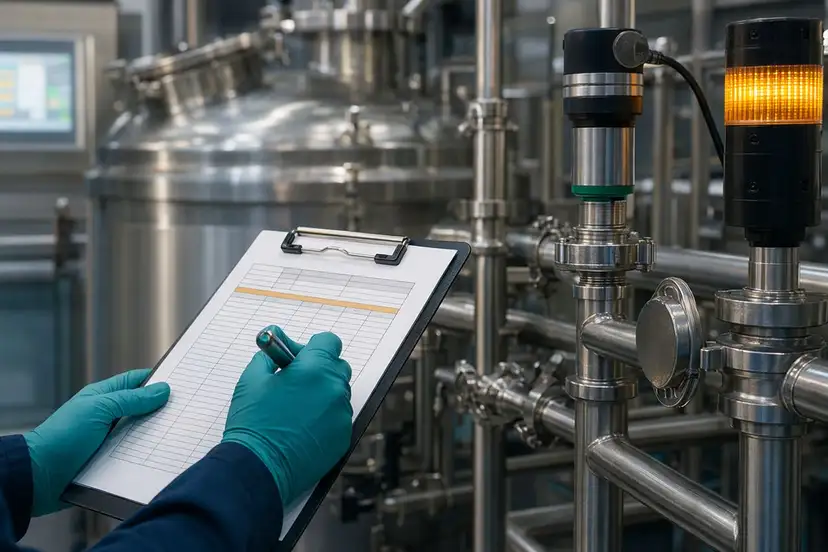
For a factory evaluating an industrial enzyme trial supplier for factories, the log sheet is not administrative overhead. It is a risk-control tool. It keeps shift teams aligned, protects the baseline comparison, and gives process improvement managers a clean record for deciding whether to advance, repeat, modify, or stop the trial.
Yieldwright Labs designs enzyme trial documentation around the way plants actually run: shift changes, alarms, line pressure, rework decisions, sampling windows, cleaning constraints, and batch-to-batch variation.
Why pilot batch log sheets matter
A weak log sheet can make a technically sound trial inconclusive.
Common problems include:
- Operators recording different details on different shifts
- Baseline and enzyme batches documented at different checkpoints
- Dose timing captured without process context
- Sample IDs written inconsistently
- Deviations described in free text with no severity or reason code
- Supervisor review happening after the pilot is already complete
- Quality results disconnected from the operating conditions that produced them
The result is a familiar post-trial question: did the enzyme underperform, or was the batch comparison not controlled tightly enough?
A strong operator log sheet reduces that uncertainty.
Start with the trial decision, then design the sheet
The log sheet should be built around the decision the factory needs to make.
Before drafting fields, define the trial gate:
- Is the objective yield improvement, cycle-time reduction, viscosity control, improved separation, more consistent conversion, lower rework, or cleaner downstream handling?
- Which process variables must be held inside the normal operating window?
- Which quality checks determine whether the batch is acceptable?
- What deviation level invalidates a comparison?
- Who reviews each batch before the next run proceeds?
A log sheet that simply collects more information is not enough. It must collect the right information in a structure that supports a commercial decision.
Core sections every enzyme pilot batch log should include
1. Batch identity and comparison role
Each log should make the batch purpose clear before the run begins.
Recommended fields:
- Batch number
- Product or formulation code
- Line, vessel, or production area
- Date and shift
- Operator initials and supervisor sign-off
- Batch role: baseline, enzyme trial, repeat enzyme trial, hold-point check, or confirmation run
- Trial protocol version
This prevents later confusion when several batches were run under similar conditions.
2. Baseline operating window
The baseline is the reference point. If it is poorly documented, the enzyme batch has nothing reliable to compare against.
Capture the normal operating range for:
- Temperature band
- pH target band, where relevant to the process
- Mixing or agitation condition
- Feed rate or addition sequence
- Hold time
- Equipment configuration
- Start and end points for the relevant process step
- Known routine interventions
The goal is not to create an idealized laboratory condition. The goal is to document the real production window so the pilot can be judged against plant reality.
3. Enzyme addition record
The enzyme addition section should be structured and time-stamped.
Include:
- Enzyme product reference or internal trial code
- Lot or container ID
- Planned addition point
- Actual addition time
- Addition method
- Dilution or pre-mix instruction, if applicable
- Operator responsible for addition
- Observed mixing state before and after addition
- Any delay, interruption, or hold after addition
Avoid relying on narrative memory. If the enzyme was added ten minutes later than planned, or under different mixing conditions, the review team needs to see that immediately.
4. Process condition checkpoints
Checkpoints should match the trial hypothesis. If the enzyme is expected to improve separation, viscosity behavior, conversion consistency, or downstream handling, the sheet should capture the conditions around those moments.
Common checkpoint fields include:
- Time from batch start
- Time from enzyme addition
- Temperature reading
- pH reading, where relevant
- Mixing condition
- Feed or transfer status
- Hold condition
- Visual observation
- Alarm or interruption flag
- Operator comment field
Use the same checkpoint sequence for baseline and enzyme batches wherever possible.
Make deviations useful, not just descriptive
Free-text deviation notes are valuable, but they are hard to compare across batches. A better approach combines structured codes with a short operator note.
Example deviation categories:
- Raw material variation
- Delayed addition
- Temperature excursion
- pH excursion
- Mixing interruption
- Equipment alarm
- Transfer delay
- Sampling delay
- Cleaning or changeover constraint
- Quality hold
- Manual intervention
- Other, with required note
Add severity levels such as minor, moderate, and critical. Define them before the trial starts.
For example:
- Minor: recorded but does not affect the comparison gate
- Moderate: may affect interpretation and requires supervisor review
- Critical: invalidates the batch for primary comparison
This helps the team avoid debating each deviation after the fact.
Protect sample traceability
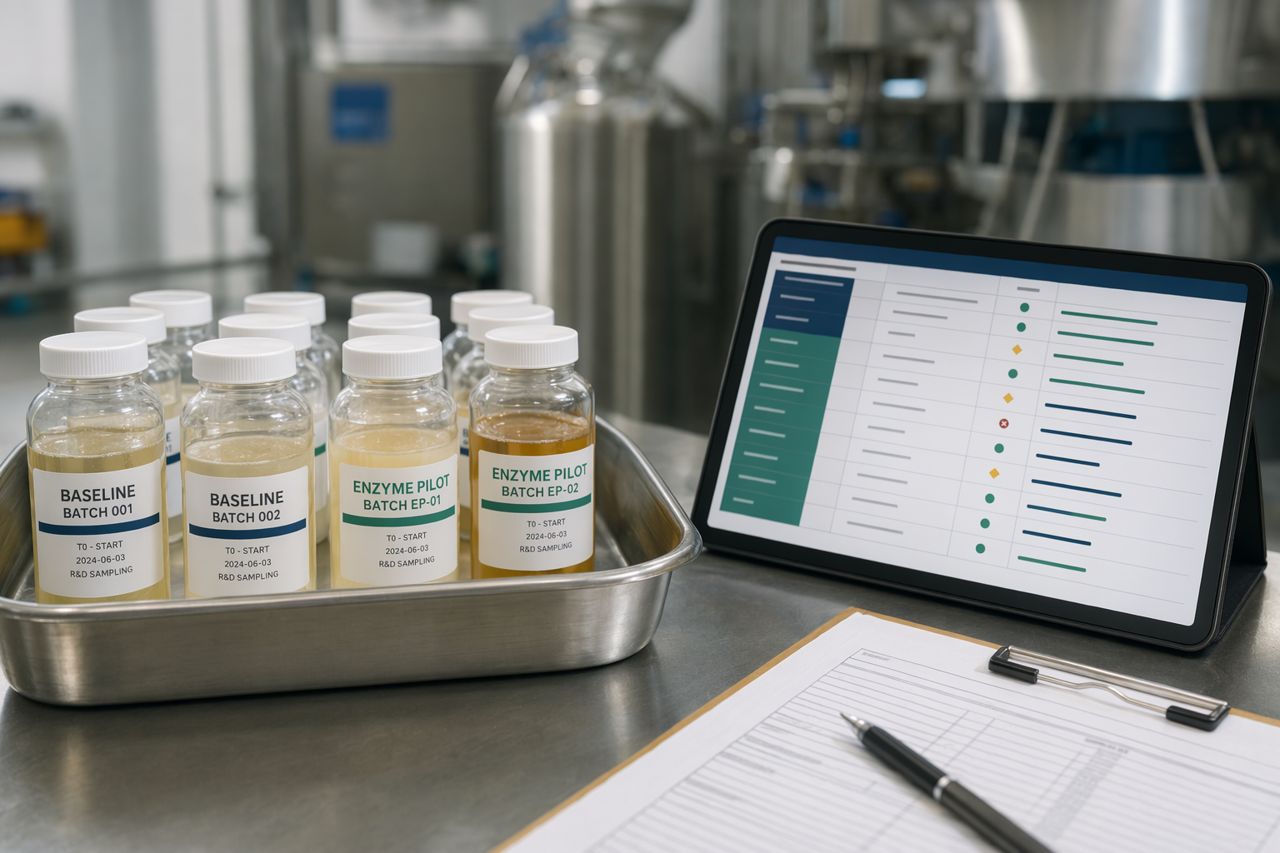
Pilot batches often produce multiple samples: baseline retain, enzyme batch retain, in-process sample, final quality sample, downstream performance sample, or customer-facing evaluation sample.
The operator log should connect every sample to the batch conditions.
Recommended sample fields:
- Sample ID
- Sampling time
- Process step
- Operator initials
- Container type
- Storage or handoff condition
- Destination: quality lab, process team, retain, downstream trial, or customer evaluation
- Linked checkpoint number
If a sample cannot be traced back to operating conditions, it has limited value in a comparative trial.
Shift handover should be part of the log, not separate from it
Many enzyme pilots run across shift boundaries. That is where documentation risk increases.
Include a handover box with:
- Current batch status
- Enzyme addition completed: yes or no
- Next required checkpoint
- Samples still required
- Open deviations
- Supervisor instructions
- Outgoing operator initials
- Incoming operator initials
This reduces reliance on informal conversations and keeps the trial protocol visible during normal production pressure.
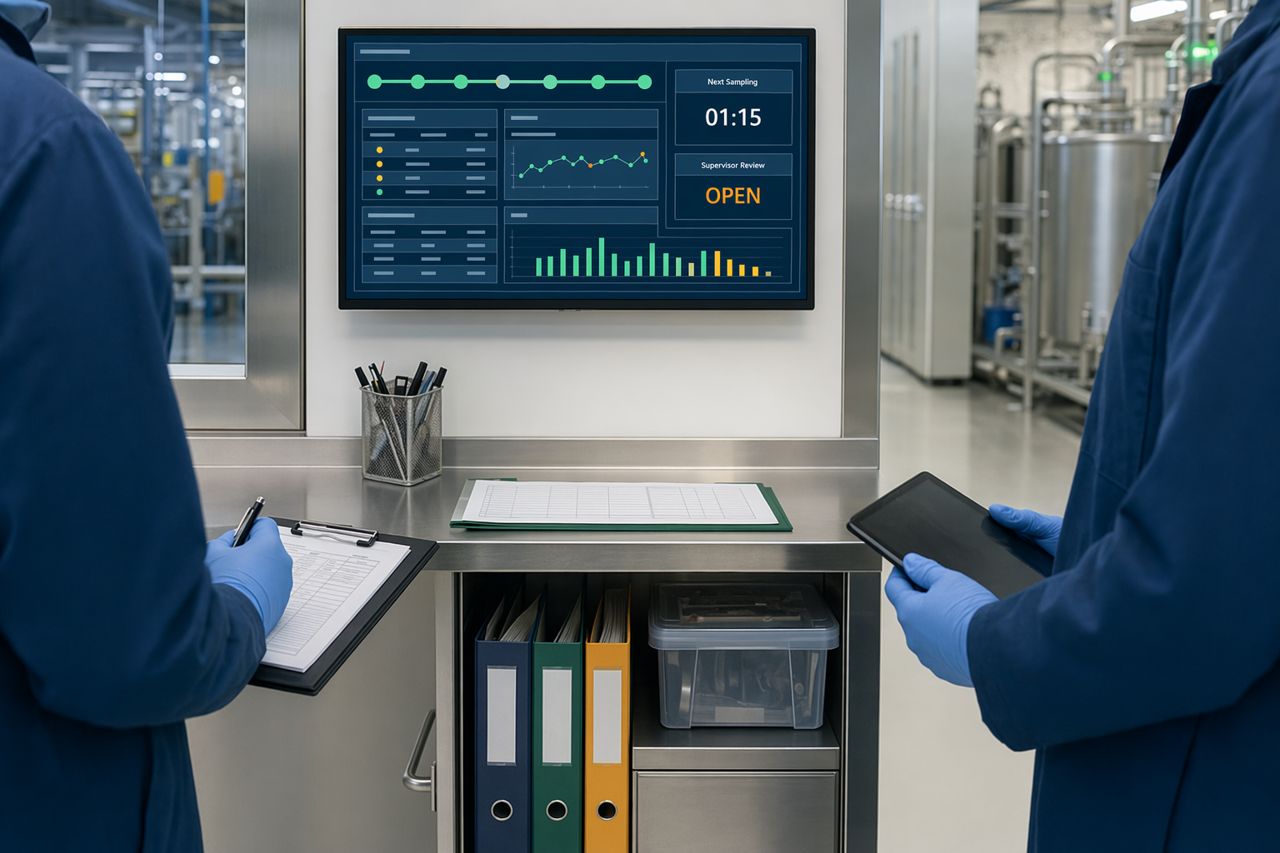
Supervisor review should happen while the pilot is still active
A common mistake is to review all logs after the trial series is finished. By then, missing entries cannot be recovered reliably.
A better review rhythm:
- Operator completes the batch log before release to the next step.
- Shift lead checks required fields before handover or batch close.
- Supervisor reviews deviations before the next comparative batch.
- Trial lead confirms whether the batch remains valid for comparison.
- The team adjusts documentation behavior immediately, not after the campaign.
This is especially important when running two or three pilot batches with limited production slots.
Design log sheets for the floor
A log sheet that looks good in a meeting room may fail on the production floor.
Practical design rules:
- Use short field labels
- Keep critical fields visible on the first page
- Separate planned values from actual values
- Use checkboxes where interpretation is not required
- Leave enough space for gloves and handwritten entries if using paper
- Match the sequence of the physical process
- Avoid fields that no one will review
- Include escalation instructions for critical deviations
- Make version control obvious
Digital forms can work well, but only if they are fast, accessible at the point of use, and aligned with the plant’s existing batch record practices.
What process improvement managers should expect to see
At the end of the pilot, the log package should support a clear review:
- Were baseline and enzyme batches run inside comparable operating windows?
- Were deviations documented and classified consistently?
- Were samples traceable to process conditions?
- Did the enzyme batch meet the agreed acceptance criteria?
- Which KPI movements are supported by clean batch evidence?
- Is another pilot required, or is the result ready for scale-up validation?
The log sheet should help the team move from opinion to decision.
Yieldwright Labs’ approach
Yieldwright Labs supports factories with enzyme trial structures that are practical enough for shift teams and rigorous enough for management review.
Our trial documentation packages can include:
- Baseline capture templates
- Enzyme pilot batch log sheets
- Shift handover sections
- Deviation code sets
- Sample traceability tables
- Batch validity rules
- KPI review summaries
- Trial gate recommendations
We focus on reducing ambiguity between lab recommendation and production-floor validation.
Request a quote
If your team is preparing enzyme pilot batches and needs plant-ready documentation, Yieldwright Labs can help structure the trial package before production time is committed.
Request a quote using the on-site form and include your process area, target KPI, expected pilot window, and any known plant constraints.