How Dosing Equipment Choices Affect Enzyme Trial Consistency
In a factory enzyme trial, the selected enzyme is only one part of the result. The way it is stored, mixed, metered, introduced, and recorded can determine whether the trial produces a useful decision or an ambiguous data set.
For process improvement managers, this matters because enzyme trials are usually judged under plant conditions: variable feedstock, operator shift changes, cleaning windows, production targets, and limited time for controlled experimentation. A sound formulation recommendation can still fail to show value if the dosing equipment introduces noise.
Yieldwright Labs works as an industrial enzyme trial supplier for factories by helping teams structure enzyme validation around real process constraints. Equipment choice is central to that structure. Pumps, tanks, skids, inline meters, and control interfaces should not be treated as secondary details; they are part of the trial design.
This article outlines how dosing equipment affects consistency, what to check before a trial starts, and how to keep equipment-related variation from being confused with enzyme performance.
Why dosing consistency is a trial-quality issue
An enzyme trial typically aims to answer a commercial question:
- Can throughput increase without compromising specification?
- Can yield improve under standard operating conditions?
- Can a process bottleneck be reduced?
- Can a downstream quality issue be stabilized?
- Can chemical, heat, water, or hold-time dependency be lowered without creating new risk?
To answer those questions, the trial needs a defensible comparison between baseline operation and enzyme-assisted operation. If dosing varies, the data becomes harder to interpret.
Inconsistent dosing can create three common problems:
- False negatives — the enzyme appears ineffective because the actual delivered dose is lower or less stable than planned.
- False positives — a short period of over-delivery creates an improvement that cannot be repeated economically.
- Unclear causality — KPI movement occurs, but the plant cannot distinguish enzyme effect from flow variation, mixing variation, temperature drift, or operator intervention.
A trial does not need laboratory perfection. It needs plant-relevant control. The target is not to remove all variation, but to reduce dosing-related uncertainty enough that production teams can make a confident decision.
The main equipment choices that shape consistency
1. Metering pumps
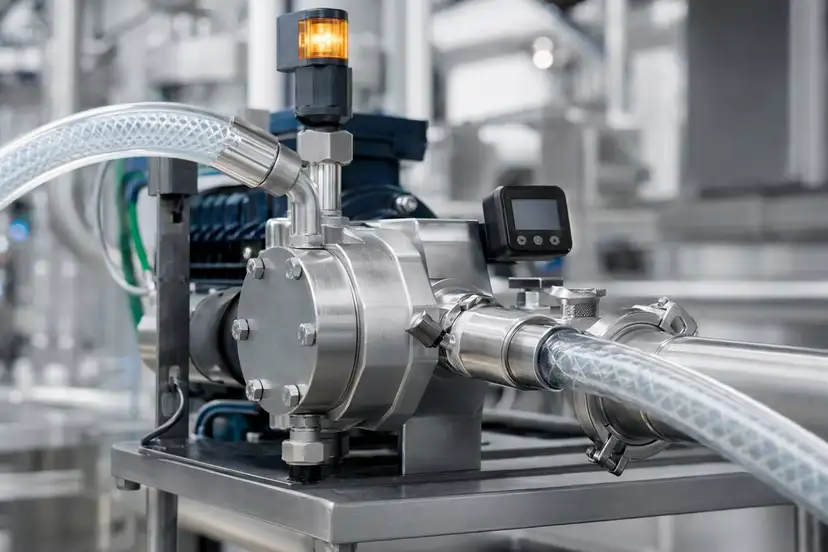
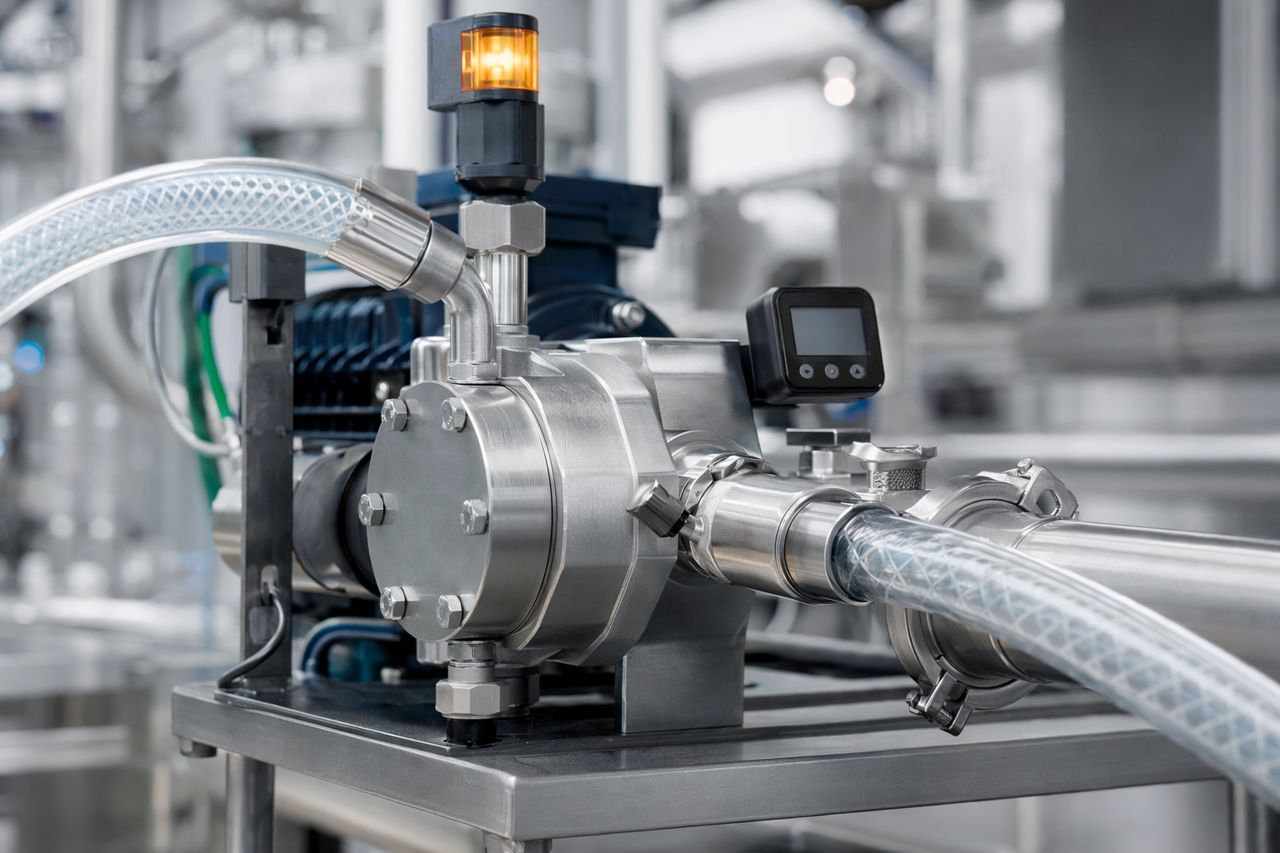
Metering pumps are often the first dosing component reviewed. The right pump type depends on the enzyme form, viscosity, expected dosing range, line pressure, temperature exposure, cleaning requirements, and the level of flow adjustment required during the trial.
Key evaluation points include:
- Ability to deliver the intended flow range without unstable pulsing
- Compatibility with the enzyme carrier and surrounding process chemistry
- Reliable priming after shutdowns or container changes
- Resistance to blockage, air entrainment, and seal wear
- Repeatable adjustment during trial phases
- Ease of calibration checks without disrupting production
For enzyme trials, the most important question is not simply whether a pump can move liquid. It is whether it can deliver repeatable, documented dosing under actual plant conditions.
2. Dosing skids
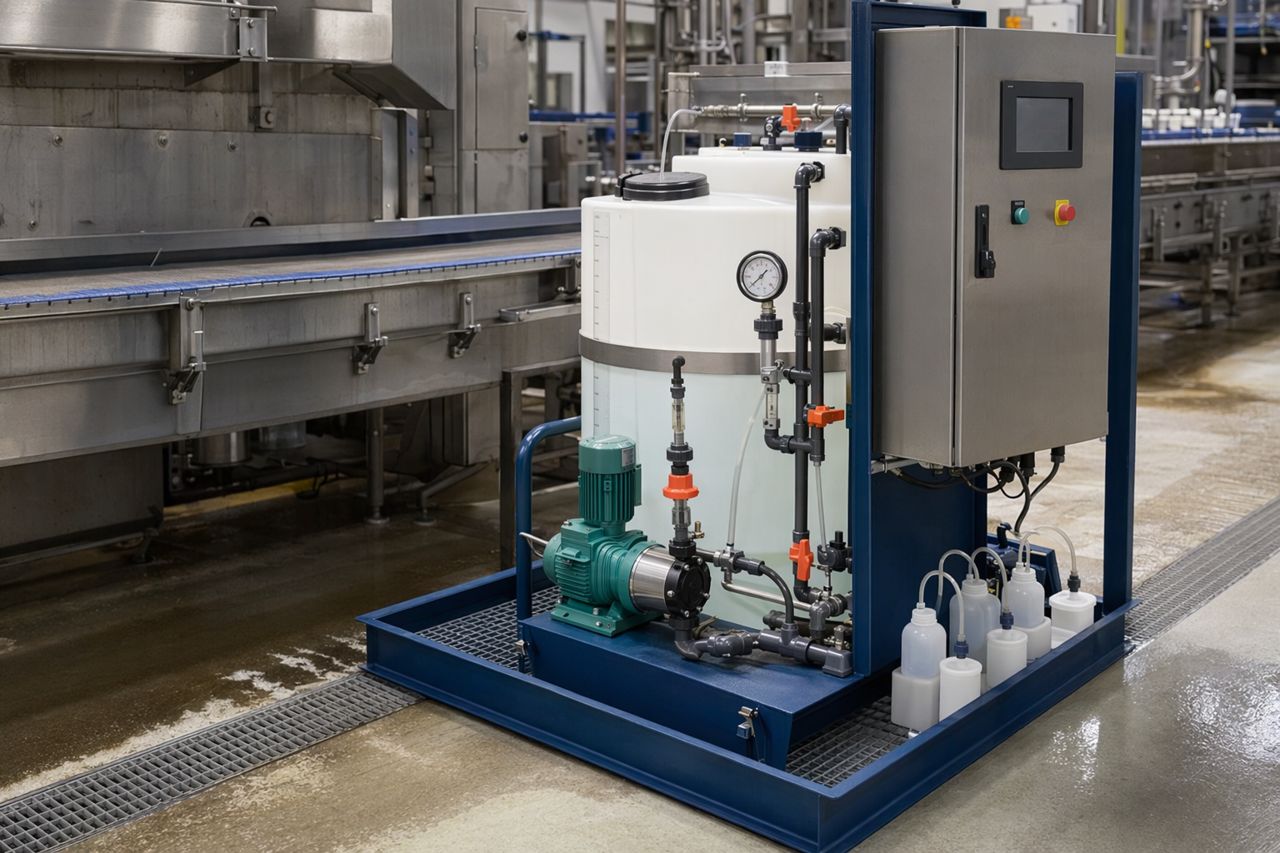
A dosing skid can provide a controlled platform for trial execution, especially when a factory wants temporary installation before permanent capital commitment.
A well-specified skid may include:
- Pump and standby pump arrangement
- Feed tank or day tank
- Flow measurement
- Filtration or strainer protection where appropriate
- Pressure indication
- Control panel or PLC interface
- Bunding or containment features
- Sample and drain points
- Clear connections for utility and process tie-ins
Skids can reduce trial setup time and improve repeatability, but only if they are matched to the plant’s physical layout and operational routines. A compact skid that is difficult to refill, isolate, clean, or monitor can become a trial constraint rather than a control asset.
3. Tanks and preparation vessels
For liquid enzyme products, tanks and day vessels influence stability, accessibility, and dosing continuity. For powder or granulated enzyme additions, preparation vessels may be used to disperse or slurry material before introduction.
Important considerations include:
- Working volume relative to shift length and trial phase duration
- Mixing intensity appropriate to the product form
- Dead zones that may create concentration gradients
- Temperature exposure during storage or preparation
- Hygiene and cleanability expectations
- Fill-level visibility or instrumentation
- Operator access for safe handling
Tank design should support consistent feed to the dosing point. If material settles, stratifies, foams, overheats, or is repeatedly exposed to contamination risk, the trial data may reflect handling failure rather than enzyme suitability.
4. Inline meters and verification points
Flow meters, weigh scales, sight glasses, level trends, and batch consumption checks can all support dosing verification. The best choice depends on the process and the level of evidence required for the trial decision.
Verification is especially useful when:
- The dosing point is remote or difficult to observe
- Multiple trial phases use different dosage settings
- Product feed rate fluctuates during the run
- The enzyme is added into a high-flow or high-pressure line
- The commercial case depends on tight cost control
Factories do not always need advanced instrumentation to run a useful enzyme trial. But they do need a way to confirm that the intended addition actually occurred, when it occurred, and at what practical consistency.
5. Control integration
Dosing can be manual, semi-automated, or integrated with plant controls. Each option can work, but the trial design should acknowledge the risks.
Manual dosing may be acceptable for short screening trials or batch processes, provided timing, quantity, and operator steps are controlled. Automated dosing is usually stronger for continuous processes, variable feed rates, and longer validation windows.
Control-related questions include:
- Is dosing linked to production rate, batch start, or manual command?
- How are start-stop events handled?
- What happens during line blockage, product changeover, or pause conditions?
- Are alarms visible to operators?
- Is actual dosing recorded, not just the setpoint?
- Can the trial team review trends after each run?
Control integration should serve the trial objective. More automation is not automatically better if the control logic is poorly defined.
Common dosing faults that weaken enzyme trials
Pulsing delivery
Pulsing can create local over-dosing and under-dosing, especially when the enzyme is added into a small stream, a low-mixing zone, or a batch vessel with poor circulation. The average daily consumption may look correct, while the process experiences uneven exposure.
Mitigation options can include pump selection review, pulse dampening, revised injection location, improved dilution, or changes to mixing strategy.
Poor injection point selection
The dosing point must provide enough residence time, contact, and distribution for the enzyme to act as intended. Adding enzyme too late, into a stagnant area, or immediately before a high-temperature or high-chemical-stress zone can reduce trial clarity.
The injection point should be selected with both process engineering and enzyme application logic in mind.
Inaccurate scaling from lab recommendation
A lab recommendation may identify a promising dosage range, but plant delivery depends on feed rate, flow variability, solids loading, retention time, and equipment capability. Direct translation without a dosing plan can lead to unstable plant execution.
A better approach is to define the production-floor dosing envelope before the trial begins, including low, target, and upper trial settings where appropriate.
Unrecorded operator adjustments
Operators often correct process issues in real time. That practical expertise is valuable, but undocumented changes can make trial interpretation difficult.
The trial plan should specify which changes are allowed, which require notification, and which trigger a data flag. This protects both the operating team and the trial result.
Container change and priming errors
Small interruptions can distort trial periods. Empty totes, air in suction lines, blocked strainers, or unprimed pumps may create gaps in enzyme addition that are only noticed after KPI review.
Trial readiness should include refill routines, line priming checks, and simple confirmation steps after any container change.
What to define before selecting dosing equipment
Before choosing or adapting equipment, the trial team should define the operating basis. This does not need to be complicated, but it does need to be explicit.
Process basis
- Batch or continuous operation
- Typical and maximum production rate
- Feed variability and campaign schedule
- Temperature and pH exposure at the dosing point
- Relevant residence time
- Cleaning and shutdown patterns
- Available utilities and installation space
Enzyme handling basis
- Liquid, powder, slurry, or prepared solution format
- Storage temperature range
- Sensitivity to shear, heat, or incompatible chemicals
- Expected daily or shift consumption
- Container size and changeover method
- Safe handling and spill control requirements
Trial evidence basis
- Primary KPI and secondary KPIs
- Baseline period and comparison period
- Required sampling points
- Data logging responsibilities
- Acceptance criteria for moving to the next gate
- Conditions that invalidate a trial run
Once those are defined, equipment selection becomes a controlled decision rather than a reactive purchase.
Trial gates: how equipment supports a cleaner decision
A structured enzyme trial should move through defined gates. Dosing equipment plays a role at each stage.
Gate 1: Baseline confirmation
Before enzyme introduction, the plant should confirm baseline KPI behavior under normal operating conditions. This establishes the comparison point and reveals process variation that already exists.
Equipment task: verify that the intended dosing setup can be installed without disrupting baseline operation or creating unplanned process changes.
Gate 2: Installation and dry run
The trial team should confirm flow paths, controls, alarms, filling routines, and documentation before enzyme is added.
Equipment task: test pump response, verify signal logic, confirm line integrity, and check operator access.
Gate 3: Controlled introduction
The first enzyme addition should be managed as a controlled event, not simply a switch-on moment. The team should monitor the process for expected and unexpected responses.
Equipment task: deliver the planned setting consistently and provide visible confirmation that dosing has started.
Gate 4: KPI tracking
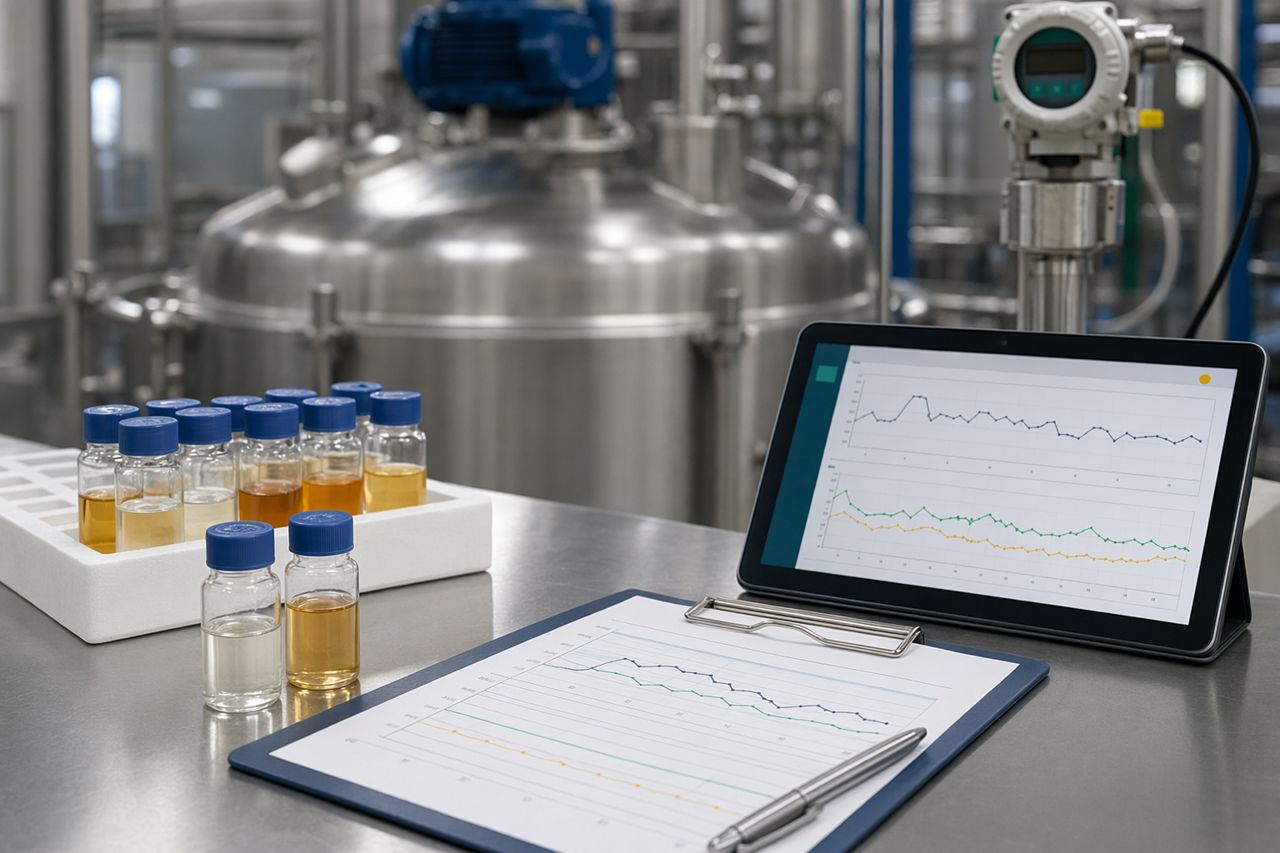
The trial period should link dosing records to production data, sample results, and operational notes.
Equipment task: provide enough dosing evidence to support KPI interpretation.
Gate 5: Scale-up or stop decision
At the end of the trial, the team should decide whether to scale, adjust, repeat, or stop.
Equipment task: help determine whether observed results are technically repeatable and commercially meaningful.
How equipment vendors and enzyme trial consultants can work together
Dosing equipment companies bring mechanical, controls, and installation expertise. Enzyme trial consultants bring application logic, dosage strategy, KPI design, and interpretation support. When the two are aligned, factories receive a stronger trial framework.
Useful collaboration points include:
- Confirming pump and skid capability against the trial dosing envelope
- Reviewing injection point location and mixing assumptions
- Defining operator steps and shift handover notes
- Planning temporary installation without unnecessary capital lock-in
- Setting up simple verification records
- Building a post-trial equipment recommendation if validation succeeds
This is why a neutral, equipment-aware trial plan is valuable. It helps the factory avoid blaming the enzyme for a delivery problem or over-specifying permanent equipment before the business case is proven.
Practical checklist for factory teams
Use this checklist before starting an enzyme trial involving new or modified dosing equipment.
Dosing readiness
- The dosing range has been defined for each trial phase
- The pump can operate reliably across the required range
- Suction and discharge conditions have been reviewed
- Priming and container-change routines are documented
- The injection point has been reviewed for mixing and residence time
- Flow confirmation or consumption verification is available
Operational readiness
- Operators know when dosing starts, stops, and changes
- Shift handover notes include trial status
- Alarm or fault response is defined
- Cleaning and shutdown routines are compatible with the trial plan
- Sampling responsibilities are assigned
- Any manual adjustments are recorded
Commercial readiness
- The primary KPI is agreed before the trial
- Baseline data is sufficient for comparison
- Cost exposure during the trial is understood
- Success criteria are defined
- The next step after a pass result is clear
- The stop condition is also clear
What a good result looks like
A good enzyme trial does not merely show a favorable data point. It shows a result that the plant can understand, repeat, and scale.
From an equipment perspective, a good result means:
- The intended dose was delivered within practical plant control limits
- Deviations were visible and explainable
- KPI movement can be linked to defined trial phases
- Operators could run the system without excessive intervention
- The equipment path is credible for longer-term use
- The commercial case is not dependent on fragile manual workarounds
If those conditions are met, the trial decision becomes stronger. If they are not met, the team may still learn something useful, but it should avoid overstating the enzyme conclusion.
Faceless explainer video: dosing consistency in enzyme trials
Embed a one-minute faceless explainer here showing the path from baseline operation to controlled dosing, verification, KPI review, and quote request. Visual style: factory macro footage, pumps, tanks, vials, sensor readouts, amber trial gates, and clean on-screen subtitles.
Work with Yieldwright Labs on a controlled enzyme trial
Yieldwright Labs helps factories plan enzyme trials that account for plant constraints, dosing equipment, operator routines, and measurable KPIs. We can support the trial structure from initial process review through production-floor validation.
If you are assessing pumps, skids, tanks, or metering systems for an upcoming enzyme trial, we can help define the dosing basis and trial gates before capital or production time is committed.
Request a quote through the on-site form and share your process objective, current dosing concept, and target KPI. We will respond with a practical trial discussion, not a generic product pitch.